If you are getting ready to sell acreage or a hobby farm in Jackson County, buyers will notice the land’s function long before they fall in love with the view. They want to know how the property works day to day, what they can actually do with it, and whether any surprise issues could slow the sale. The good news is that a little preparation can make your property easier to understand, easier to market, and more appealing from the first showing. Let’s dive in.
Start With How Buyers Think
When buyers shop for rural property in Jackson County, they are usually evaluating more than the house. They are looking at access, utilities, drainage, boundaries, and whether the acreage truly fits their plans.
Jackson County’s rural living guidance makes that clear. Rural service levels can differ from town life, private roads are not county maintained, emergency response times are not guaranteed, and cell service or high-speed internet may be limited in some areas. For many buyers, those practical details matter just as much as curb appeal.
Land value also shapes buyer expectations. Iowa State reported average Iowa farmland value at $11,549 per acre in 2025, while USDA NASS reported Iowa non-irrigated cropland rent at $274 per acre and pasture rent at $65 per acre. That helps explain why buyers pay close attention to usable acres, land type, and how the property functions as cropland, pasture, or a homesite.
Gather Records Before You List
Acreage sales tend to move more smoothly when you can answer basic questions quickly. Before your property goes live, organize the records a buyer is most likely to request.
Start with your deed, legal description, parcel ID, and any survey or plat you have. Jackson County’s GIS mapping is helpful for a visual overview, but the county says those property lines are only approximate and should not be treated as legal boundary proof. If boundaries are unclear, a certified surveyor may be worth addressing before listing.
You should also gather any documents tied to access or use. That can include easements, utility rights, drainage records, or fence agreements. Jackson County notes that some easements may not be of record and that fence lines do not always match the legal property line.
If the property is leased, pull together the written lease, tenant contact information, and possession dates. Iowa State Extension notes that many Iowa farm leases continue from year to year unless properly terminated, so lease status is a key issue to clarify early.
For acreage with a house, well, septic system, or active agricultural use, collect the records that help prove condition and function. Useful documents may include:
- Well logs
- Water test results
- Wastewater system permits and design plans
- Maintenance records
- Pesticide application records
- Organic certification paperwork, if applicable
If the sale includes a dwelling with 1 to 4 units, Iowa’s residential disclosure rules may apply. That disclosure is intended to share known material conditions in good faith, so accuracy matters.
Make the Land Feel Clear and Usable
One of the biggest mistakes sellers make is letting a rural property feel harder to understand than it really is. Buyers respond better when the acreage looks maintained, accessible, and easy to picture themselves using.
Start with the basics that improve first impressions. Mow field edges, trim overgrowth, remove junk piles or unused equipment, and repair obvious issues with fencing, gates, or entry points. These steps help buyers focus on the land’s potential instead of deferred maintenance.
Property access deserves special attention. If a driveway entrance is rough, overgrown, or hard to spot, buyers may assume other parts of the property have been neglected too. Clear, usable access helps the acreage feel more functional from the moment someone arrives.
Focus on Fences, Water, and Pasture Features
If your property is set up for hobby farming or livestock, buyers will look for practical infrastructure. They want to see whether the land is ready for grazing, haying, or a mix of uses.
Important features often include:
- Functional fencing
- Reliable water access
- Shade areas
- Corrals or loading areas
- Visible forage condition
Iowa forage production commonly includes alfalfa, forage grasses, hay, pasture, and annual forages. If your acreage supports one or more of those uses, present that clearly in the way the property is cleaned up, photographed, and described.
Present Outbuildings as Assets
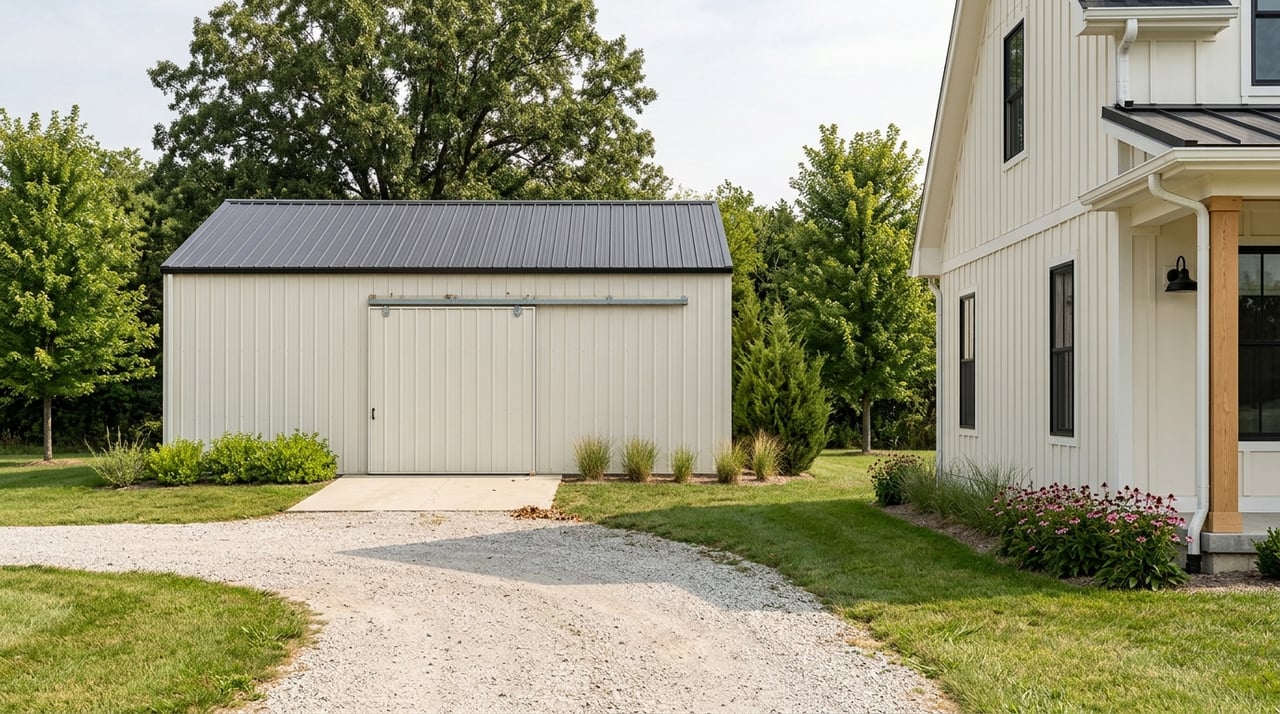
Barns, sheds, feed storage, greenhouses, and similar structures can add real value when they look useful and organized. Buyers tend to see these buildings as infrastructure, not just extra square footage.
That means your goal is not to make them look empty. Instead, help them feel functional and well cared for. A clean aisle, accessible doors, organized storage areas, and visible utility connections can go a long way.
Address Drainage and Site Conditions
Drainage is not a small detail in Jackson County. The county’s rural living guide specifically advises property owners to review drainage district maps with the County Engineer and warns against building over or planting trees above drain tiles.
Flooding and runoff can also affect roads, culverts, and how water moves across the property. If your acreage has drainage features, low areas, tile lines, or known runoff patterns, it helps to understand them before buyers start asking questions.
Buyers also often review soil information early in their search. The NRCS Web Soil Survey is the current official source for soil maps and soil information, and extension checklists point buyers toward soil type, water table depth, bedrock depth, flood zones, and farmland classifications. If your land has strong agricultural utility or clear homesite potential, being ready to discuss those basics can strengthen buyer confidence.
Verify What Can Actually Be Done
Many acreage deals stall when buyers discover that assumptions about the property were never confirmed. In Jackson County, that often comes down to zoning, homesite potential, access permits, and wastewater compliance.
Jackson County’s zoning department administers zoning, floodplain management, subdivision rules, and an airport tall-structure ordinance. The county also notes that not all lots can be built on. If you plan to market the property as buildable, or suggest future parcel splits or new structures, verify that information before the listing goes live.
Check Road Entrance Rules Early
Access can be a major local issue, especially for tracts that may attract buyers with equipment, trailers, or farm trucks. Jackson County’s entrance policy says entrances onto county secondary roads require a permit.
Wider entrances may also require documentation of anticipated semi-truck traffic and adequate sight distance under Iowa DOT standards. If your entrance is a selling point, or a potential weak point, it is smart to address that early rather than let it become a closing surprise.
Confirm Septic and Well Status
For many Jackson County acreage buyers, well and septic questions are at the top of the due diligence list. If you can provide solid records and recent information, you reduce uncertainty right away.
Jackson County Environmental Health regulates onsite wastewater systems serving four homes or fewer or fewer than 15 people. The county says existing septic systems require a permit and a Time of Transfer inspection, and it notes that soil testing must occur in undisturbed native soils.
For private wells, the Iowa DNR advises obtaining a well and water-system inspection before a sale. The DNR also recommends annual testing for coliform bacteria and nitrate, with arsenic testing at least once during the life of the well. If you have recent testing or inspection records, keep them ready for showings and negotiations.
Clarify Boundaries and Possession
Few things make a rural buyer more hesitant than uncertainty about where the property begins, where it ends, and who has rights to use it. Boundary confusion can create immediate doubt, even when the acreage itself is attractive.
Make sure you understand whether the visible fence lines match the legal description. Jackson County specifically cautions that they may not. If there is any question about corners, crossings, or neighboring use, it is better to sort that out before marketing than during contract negotiations.
Possession also matters more on acreage than many sellers expect. If land is leased for crop ground, pasture, building use, or storage, buyers need to know what transfers with the sale and when they can take control.
Build a Listing That Answers Questions Fast
The strongest acreage listings do not just showcase the property. They reduce uncertainty. In Jackson County, that means giving buyers a clear picture of access, boundaries, utilities, drainage, water and septic status, tenant arrangements, and county compliance.
When you prepare that information ahead of time, your listing feels more credible and easier to act on. Buyers can spend less time guessing and more time deciding whether the property fits their goals.
That kind of preparation is especially important for hobby farms and smaller acreages, where buyers may be comparing several very different properties at once. The easier you make it to understand your land, the more likely you are to keep serious buyers engaged.
If you are thinking about selling acreage or a hobby farm in Jackson County, working with a local agent who understands how rural buyers evaluate land can make the process much smoother. For hands-on guidance on pricing, preparation, and marketing, connect with Rose Bowen-Conlon.
FAQs
What do Jackson County acreage buyers look at first?
- Buyers usually start with access, boundaries, utilities, drainage, usable acres, well and septic status, and whether the property fits a practical use like cropland, pasture, or a homesite.
What records should you gather before listing acreage in Jackson County?
- Start with the deed, legal description, parcel ID, survey or plat, easement records, lease documents, well and septic records, water test results, and maintenance or agricultural use records.
Do Jackson County GIS maps prove acreage boundaries?
- No. The county says GIS property lines are approximate visual references and should not be used as legal boundary proof.
Does a Jackson County acreage need septic review before sale?
- Yes, if the property has an onsite wastewater system that falls under county rules, Jackson County says existing systems require a permit and a Time of Transfer inspection.
Should you test a private well before selling rural property in Iowa?
- The Iowa DNR says a well and water-system inspection should be obtained before a sale, and it recommends regular testing for coliform bacteria and nitrate, plus arsenic testing at least once during the life of the well.
Can you market any Jackson County acreage as buildable?
- No. Jackson County says not all lots can be built on, so you should verify homesite potential, parcel splits, and any future structure plans with zoning before marketing the property that way.