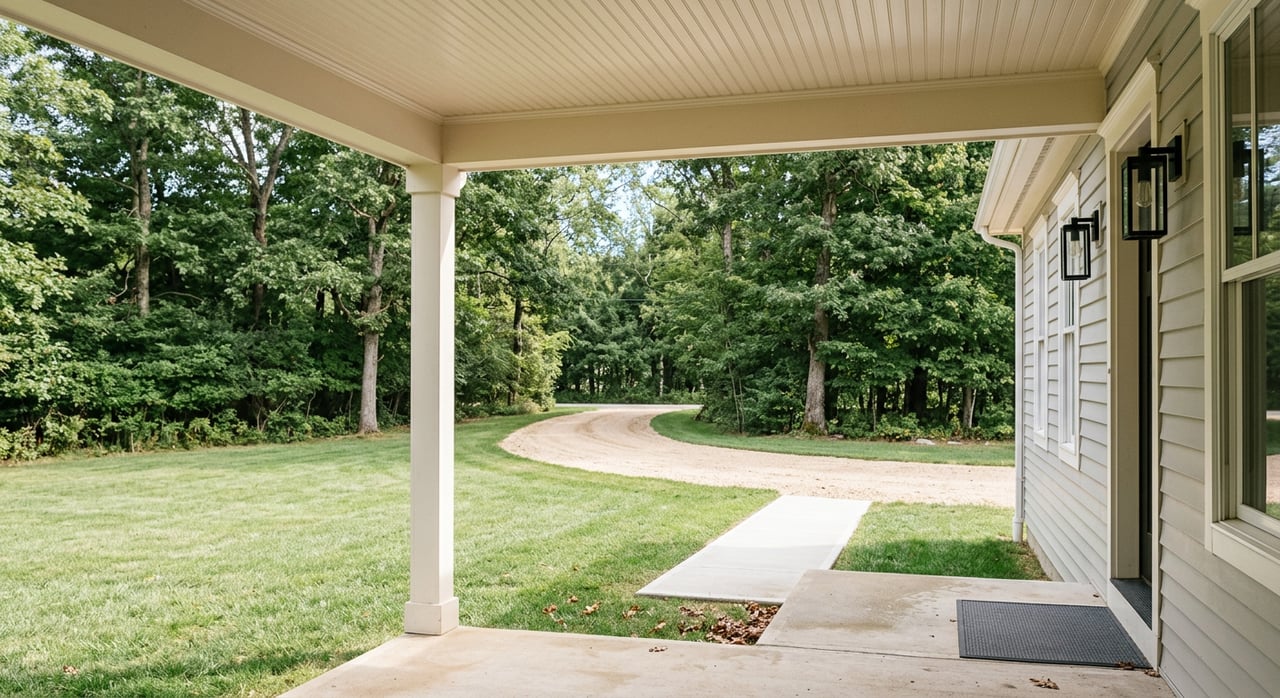
Thinking about a little more space, starry nights, and room to breathe? If Jackson County is on your radar, you’re not alone. Many buyers look here for acreage that still keeps everyday needs and commutes manageable. In this guide, you’ll learn where acreage tends to cluster, what lot sizes are common, how utilities and zoning work, and what to expect if you commute to Dubuque. Let’s dive in.
Jackson County snapshot
Jackson County offers a low-density rural setting with practical access to services in and around Maquoketa. According to the U.S. Census QuickFacts, the county has roughly 19,400 residents, a population density of about 30.6 people per square mile, and a high rate of homeownership at about 80.7 percent. The median value of owner-occupied homes is about $175,000, which signals broad affordability by statewide measures. You can explore more data in the official U.S. Census QuickFacts for Jackson County.
The county spans hundreds of square miles with a mix of farm ground, woodlands, and Mississippi River bluffs. County land use policy steers most new residential growth toward the edges of towns to protect productive farmland and scenic areas along the river. You can see those priorities in the Jackson County Land Use Policy.
Where acreage tends to cluster
Acreage inventory moves with the seasons, but several patterns repeat. These clusters align with county guidelines that favor development near existing services and protect the Great River Road corridor.
Town-adjacent acreages
You’ll often see smaller acreage and hobby-farm listings just outside Maquoketa and other towns. These locations balance privacy with easier access to paved roads, schools, and utilities. The county’s land use plan points growth toward areas that can be served efficiently, which is why these edges see a steady trickle of options. Review the policy details in the Jackson County Land Use Policy.
River and bluff properties
Bellevue, Sabula, and stretches along the Great River Road attract buyers seeking views, timber, and proximity to river recreation. Expect added scrutiny for parcels here due to floodplain and bluff protections, and be ready for premium pricing tied to scenery. The county highlights the importance of preserving the river corridor’s character in the Land Use Policy.
Road-front splits and small rural subdivisions
Many 5 to 40 acre listings appear along county roads or in small private subdivisions. These are common for privacy seekers who don’t need a working farm footprint. Always confirm road ownership and maintenance. The county’s “A Guide to Rural Living” explains how private subdivision roads are maintained by owners and that school buses may not travel those private roads. Read more in A Guide to Rural Living.
Tip: If you want to see parcel patterns, explore the county’s parcel viewer. It’s a great way to understand lot shapes, access, and surrounding uses before you set up showings. Start with Jackson County GIS and Beacon.
Lot sizes, farm structure, and housing stock
Not all acreage is a farm. In Jackson County, production-scale farms are often significantly larger than lifestyle acreages. The 2022 USDA Census of Agriculture reports about 1,131 farms on roughly 292,239 acres, with an average farm size near 258 acres. That helps explain why 5 to 40 acre properties are marketed to lifestyle and hobby-farm buyers rather than as commercial farm operations. See the county’s farm profile in the USDA 2022 Ag Census.
For housing, you’ll find a mix of older farmhouses on acreage, town single-family homes, and some manufactured homes in rural areas. County assessor and GIS records can help you verify year built, structure type, and parcel boundaries. Remember that sellers sometimes split smaller acreage out of a larger holding. Zoning, road access, and septic suitability usually drive what is feasible. Guidance is available from the county’s zoning office at Jackson County Zoning and Ordinances.
Utilities and services: what to check
Rural living can be rewarding, but it comes with different service realities than in town. Before you write an offer, confirm the basics for the exact parcel.
- Road access. Is the road public or private? Who handles snow removal and repairs? The county notes that many roads are gravel and private roads are maintained by owners. Learn more in A Guide to Rural Living.
- Wells and septic. Many rural homes use private wells and septic systems. Soil tests and percolation results drive septic feasibility and costs. Contact Environmental Health for permits and records, as outlined in the county’s Rural Living Guide.
- Electric service. Confirm proximity to power and any line-extension costs for remote parcels. Utility extensions can add up, and the county’s guide explains why it pays to verify before closing.
- Internet and cell coverage. The Census estimates about 86 percent of households have a broadband subscription, but speeds and providers vary by address. Check actual service for the property and consider running a speed test. See the broadband metric within U.S. Census QuickFacts.
- Emergency services and healthcare. Response times can be longer in remote locations. The county’s hospital, Jackson County Regional Health Center in Maquoketa, is your local hub. For higher-level care, many residents go to Dubuque. Learn about the local hospital at Jackson County Regional Health Center.
Zoning, overlays, and due diligence
Zoning, overlays, and environmental factors shape what you can do on a property. A quick front-end review can prevent costly surprises.
- Confirm zoning. Ask the county for a zoning letter so you know whether the parcel is Agricultural, Rural Residential, or another district, and which uses are allowed. Start at Jackson County Zoning and Ordinances.
- Floodplain and bluff protections. Parcels near the Mississippi River corridor often have special protections. Review the county’s policy framework in the Land Use Policy.
- Septic and well feasibility. Obtain soil borings or percolation tests as needed, and verify permits with Environmental Health. The process is outlined in the county’s Rural Living Guide.
- Boundaries and surveys. Use the county GIS to visualize layout, but do not rely on it as a legal boundary. Order a survey when boundaries or access are unclear. The parcel viewer is at Jackson County GIS.
- Property tax classification. Ask the assessor or auditor how a change from agricultural to residential use might affect taxes.
Commutes to Dubuque and nearby hubs
Countywide, the average travel time to work is about 24.8 minutes, according to the Census. If you commute to Dubuque, your time depends on your origin town, route, and winter conditions. Major routes include US 61, which connects Maquoketa north toward Dubuque, and US 52 along the river.
Representative drive times in typical conditions:
- Maquoketa to Dubuque: about 31 miles and roughly 33 minutes. See a sample route at Maquoketa to Dubuque driving estimate.
- Bellevue to Dubuque: about 24 to 25 miles and roughly 34 to 36 minutes via the scenic US 52 corridor. Check a sample at Bellevue to Dubuque estimate.
- Preston to Dubuque: about 40 miles and roughly 50 to 60 minutes depending on route. See a sample at Preston to Dubuque estimate.
Tips for planning: consider whether your primary route is a state highway or a narrower, winding river road, and build in winter buffers. If you work remote part-time, confirm broadband options at the exact address before you buy. A quick commute test at your usual drive time can also help you set realistic expectations.
How to choose the right rural parcel
Use this simple path to move from idea to confident offer:
Clarify your acreage goal. Decide whether you want privacy and space for a shop or garden on 5 to 10 acres, or a larger footprint for hobby livestock or timber up to about 40 acres. For production agriculture, you’ll likely look at much larger tracts, as shown by the USDA Ag Census.
Narrow your geography. If your job is in Dubuque, map 30, 45, and 60 minute drive rings and note which towns fit your lifestyle. Town-adjacent edges tend to offer the best utility access, while river bluffs offer scenery with added restrictions.
Verify access, utilities, and zoning early. Use the county’s checklist in A Guide to Rural Living and confirm zoning at Jackson County Zoning.
Walk the land with a clear plan. Note slopes, tree cover, and likely building sites. Ask about prior agricultural use or leases, and confirm any recorded easements.
Order the right inspections. For homes on acreage, that usually includes well and septic evaluations, and sometimes additional soil testing if you plan to build or expand.
A partner for rural living in the tri-state area
If you want space without losing connection to work and services, Jackson County can be a smart fit. The landscape ranges from town-edge acreages to bluff-side retreats, and the county offers clear resources to help you plan. When you are ready, work with a local advisor who understands zoning, utilities, and cross-border dynamics across the Dubuque corridor.
If you’d like help narrowing locations, confirming parcel details, or scheduling showings across multiple counties, reach out to Rose Bowen-Conlon. You’ll get boutique, high-touch guidance backed by modern marketing and a tri-state network.
FAQs
What is considered an acreage in Jackson County?
- Lifestyle buyers commonly target 5 to 40 acre parcels, while production farms average about 258 acres per the USDA 2022 Ag Census.
How reliable is internet for rural properties?
- About 86 percent of households report a broadband subscription in the county, but speeds and providers vary by address, so verify service at the specific property using U.S. Census QuickFacts.
What should I know about private roads and maintenance?
- Some rural subdivisions have private roads maintained by owners, and school buses may not use them; confirm road ownership, snow removal, and access in the county’s Guide to Rural Living.
Are there special rules near the Mississippi River and bluffs?
- Yes, floodplain and bluff protections apply in parts of the Great River Road corridor; review the county’s priorities in the Land Use Policy.
How long is the commute to Dubuque from major Jackson County towns?
- Typical estimates are about 33 minutes from Maquoketa, 34 to 36 minutes from Bellevue, and 50 to 60 minutes from Preston; see examples at Maquoketa to Dubuque, Bellevue to Dubuque, and Preston to Dubuque.